- Reels branch
- Reels · node I
- Played for dew · no cash value
Heartwood
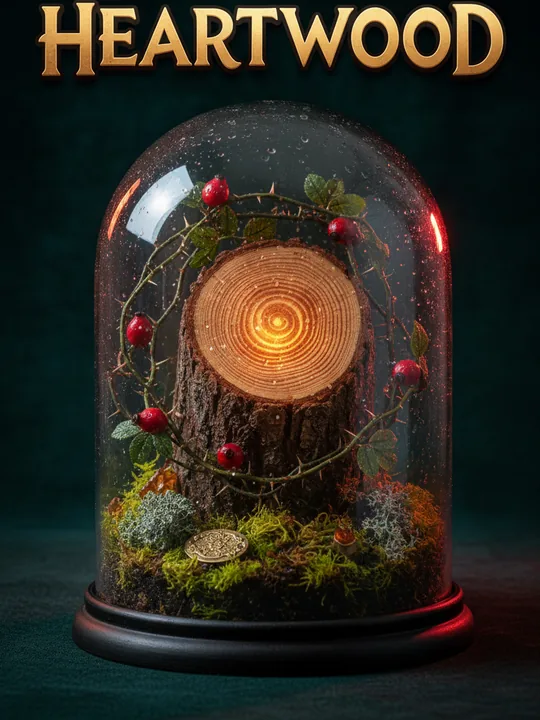
Five reels, fifteen lines, and one rule that changes everything: a run only counts if it passes through the centre reel, the heartwood.

Pick a stake, then press Spin.
The games are resting.
A pause is on for this device.
The Library, the field notes and the Clearing stay open. See your settings.
About Heartwood
Most reel games read a line from the left edge, so the first reel decides almost everything. Heartwood reads it from the middle instead. Every run has to grow out of reel 3, the cut through the trunk where the growth rings show, and it can spread left, right or both ways from there. A pair on the edge means nothing; a pair that touches the heartwood is halfway to something.
That one change makes the board easier to read than it looks. Glance at the centre column first: if it holds a ring or a high picture, follow the lines that pass through that cell and see how far the run can reach. The lines are drawn in the rules box below, and the result line under the reels names the best run of each spin.
The pictures are things you might find in an old hedge: a briar rose, a jewel beetle, a moth brooch, a silver acorn, and three kinds of berry. The heartwood spins are the feature. They come round roughly once in fifty spins, and while they run the whole centre reel is wild, so most lines have a head start.
How to play
- Pick a stake: 10, 20, 50, 100 or 200 dew for the whole spin.
- Press Spin. Fifteen fixed lines are read at once.
- A line counts when three, four or five matching pictures sit side by side on it and the run includes reel 3. A run on reels 1 to 3, 2 to 4 or 3 to 5 is fine; a run on reels 1 and 2 only is not.
- The heartwood ring on reels 2, 3 and 4 stands in for every picture except amber sap.
- Three or more drops of amber sap anywhere pay on their own and start six heartwood spins, in which every row of reel 3 is a heartwood ring.
The fifteen lines
Reel 3, the heartwood, is shaded. Every paying run includes the cell where its line crosses it.
Pay table
Every return is a multiple of your stake. Dew has no cash value and nothing here can be exchanged for anything.
| Symbol | 3 in a run | 4 in a run | 5 in a run |
|---|---|---|---|
 Briar rose | 0.97× | 3.88× | 14.55× |
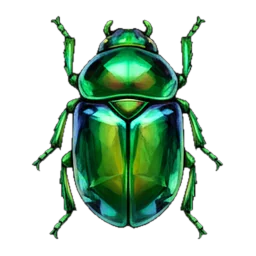 Jewel beetle | 0.78× | 2.91× | 9.7× |
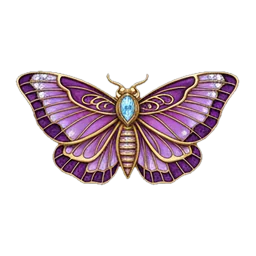 Moth brooch | 0.58× | 1.94× | 5.82× |
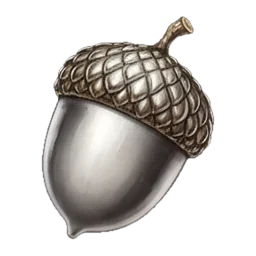 Silver acorn | 0.49× | 1.46× | 3.88× |
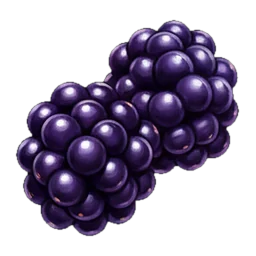 Blackberries | 0.24× | 0.78× | 1.94× |
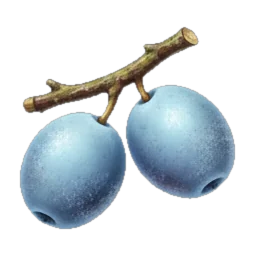 Sloes | 0.19× | 0.58× | 1.55× |
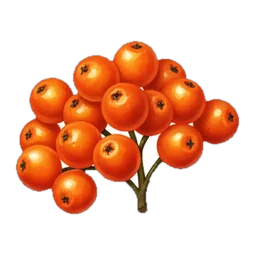 Rowan berries | 0.15× | 0.49× | 1.16× |
 Heartwood ring (wild, reels 2 to 4) | Stands in for every picture except amber sap | ||
 Amber sap | 2× | 10× | 50× |
Amber sap pays anywhere on the grid (3, 4 or 5 drops) and three or more start 6 heartwood spins, in which the whole of reel 3 is wild.
Fair play
Every result comes from your browser's random number generator, through the rules above and nothing else. There is no hidden balancing, no streak memory and no change of odds after a quiet patch or a good run. The same pay table is read by the game and printed on this page.
Questions
Why does a run have to touch reel 3?
That is the idea of the game: lines are read from the heartwood outwards. It means the centre column matters most, so it is the one to watch.
Can two runs on one line both pay?
No. Each line pays its single best run. Different lines pay separately, and amber sap pays on top.
Do the heartwood spins cost anything?
No. They are part of the spin that started them, and what they return is added to that spin's result.
At a glance
- Grid
- 5 reels × 3 rows, 15 fixed lines
- Runs
- 3, 4 or 5 in a row, through reel 3
- Wild
- Heartwood ring, reels 2 to 4
- Feature
- 3+ amber sap: 6 heartwood spins
- Stakes
- 10 to 200 dew per spin
- A round
- about 3 seconds
Where to stop
Heartwood spins come round about once in fifty spins on average, and nothing makes them more likely after a quiet patch. If you notice yourself spinning on because the feature feels due, that is the moment to stop or set a checkpoint.
Set a checkpoint